
How to Know if Your Car Has Advanced Driver Assistance Systems (ADAS)
Quick Ways to Tell if Your Car Has ADAS
Check your owner's manual, look up your vehicle's VIN on the manufacturer's website, or check the area around your rearview mirror for a small camera module. Advanced Driver Assistance Systems, or ADAS, have become standard equipment on most vehicles built within the last several years, so there's a good chance your car already has at least one feature even if you've never noticed it working.
The owner's manual is the most reliable source, since it lists every safety system installed at the factory, along with which ones came standard versus as part of an optional package. If you no longer have the manual, a VIN lookup through the manufacturer's website or a quick call to your dealership confirms the same information in a couple of minutes. Either method beats guessing, especially since ADAS features often run quietly in the background until the moment they're actually needed.
Signs Your Vehicle Has ADAS Technology
A few physical and everyday clues make ADAS easy to spot once you know what to look for. A camera or sensor housing mounted near the top of the windshield, close to the rearview mirror, is one of the clearest signs, since many ADAS features rely on that camera to read lane markings and traffic ahead. Radar modules built into the front grille or bumper serve a similar purpose for adaptive cruise control and forward collision systems.
Trim and package names can confirm it too. Manufacturers often market ADAS under a branded name, such as Toyota Safety Sense, Honda Sensing, or Ford Co-Pilot360, so a quick look at your trim level settles the question. If your vehicle is newer, the window sticker that came with it at purchase also lists every driver-assistance feature by name. Dashboard warning lights are another giveaway: an icon for lane departure, blind spot monitoring, or forward collision warning means the feature exists and is currently active on your vehicle.
You may have also noticed ADAS working without realizing what it was. A gentle steering correction when drifting out of your lane, an audible alert when backing out of a parking space, or automatic braking kicking in before a close call are all signs your vehicle already relies on this technology every time you drive.
Why ADAS Calibration Matters Once You Know
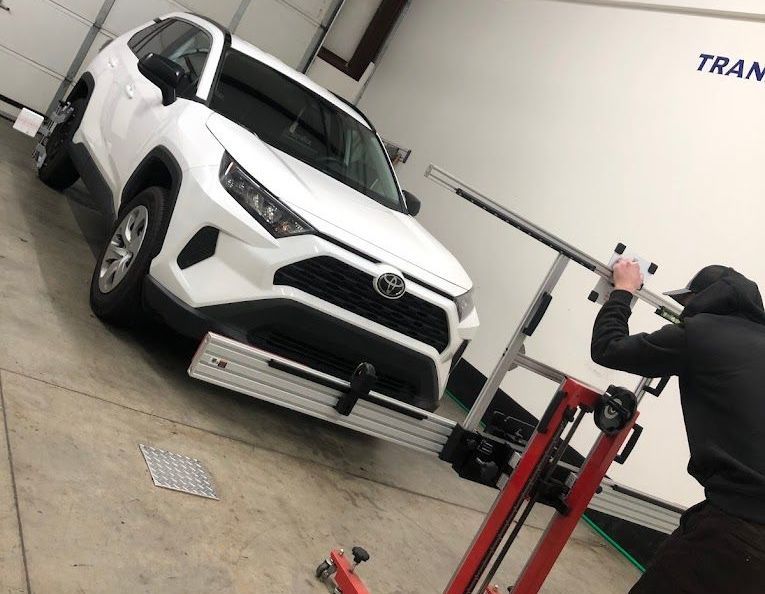
Confirming your car has ADAS matters most the next time your windshield needs attention. The cameras and sensors these systems rely on are mounted on or directly behind the glass, so replacing the windshield can affect their alignment. That can impact how accurately the system reads lane markings, following distance, or an object ahead, which is why ADAS calibration may be required after a windshield replacement, depending on the vehicle manufacturer's specifications.
Calibration resets the cameras and sensors so they read the road the way the manufacturer intended, using equipment and procedures matched to your vehicle's exact make and model. Skipping this step doesn't disable the system outright, but it can leave it working off inaccurate information, which defeats the purpose of having it in the first place.
Transparency Auto Glass calibrates ADAS systems as part of our windshield replacement service throughout Garner and the Research Triangle, following manufacturer-recommended calibration procedures.
ADAS Calibration Backed by a Lifetime Warranty
Every ADAS calibration we perform is backed by our nationwide lifetime warranty on workmanship and handled by technicians trusted by dealerships across the Research Triangle. Get a free quote today and we'll confirm whether your vehicle needs calibration before any work begins. To learn more about ADAS calibration, visit our knowledge center.